
8 Amazon Rainforest Endangered Species That Need Saving in 2024

Updated: Oct 16, 2025
The Amazon Rainforest, often referred to as the “lungs of the Earth,” is a vast and biologically rich environment that is home to a staggering array of wildlife. Unfortunately, this incredible biodiversity is under threat from deforestation, climate change, and illegal wildlife trade. This all puts more than 2,300 animals at high risk of extinction in the Amazon.[1] As we step into 2024, it is more crucial than ever to focus on the conservation of endangered species that call this rainforest their home. Here are eight Amazon Rainforest endangered species that urgently need our help:
8 Amazon Rainforest Endangered Species
1. Jaguar (Panthera onca)
Population: Estimated to number fewer than 15,000 in the wild, highlighting a drastic decline due to human activities.
Unique Fact: Jaguars are exceptional swimmers, preying on aquatic animals like fish and caimans. Their role as apex predators is crucial in maintaining the ecological balance of their habitat.
Threats: Extensive habitat loss from agricultural expansion, illegal hunting for their beautiful pelts, and conflict with farmers.
Conservation Focus: Efforts to mitigate habitat destruction and create corridors for safe passage are essential. Jaguar conservation is pivotal for maintaining the ecological balance within their habitat, emphasizing their role as a keystone species in the Amazon ecosystem.

2. Amazonian Manatee (Trichechus inunguis)
Population: Their secretive nature makes accurate population counts challenging, but they are classified as vulnerable.
Unique Fact: The Amazonian manatee is distinctive for not venturing into saltwater and for having a unique white or pink belly patch.
Threats: Water pollution, particularly mercury from illegal gold mining, and the destruction of their aquatic plant food sources due to damming activities.
Conservation Focus: Protecting waterways from pollution and ensuring the sustainability of aquatic vegetation are crucial for the survival of the Amazonian manatee. Their conservation highlights the importance of clean and healthy river systems in the Amazon.

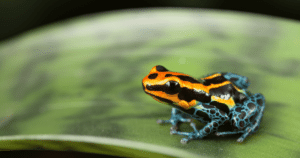
3. Poison Dart Frog (Dendrobatidae family)
Population: The status varies significantly across species, with many facing critical endangerment.
Unique Fact: These frogs’ vibrant colors warn predators of their toxicity—a defense mechanism derived from their diet of toxic ants and termites.
Threats: Their survival is compromised by deforestation for logging and agriculture, alongside capture for the illegal pet trade.
Conservation Focus: Addressing deforestation and the illegal pet trade, alongside preserving the frogs’ natural habitat, is vital. These amphibians are key indicators of environmental health, reflecting the pristine condition of their surroundings.
4. Harpy Eagle (Harpia harpyja)
Population: Estimated at less than 50,000, with numbers continuing to fall.
Unique Fact: Possessing the largest talons of any living eagle, they can lift prey up to their own body weight, playing a vital role in controlling populations of other animals.
Threats: The loss of large swathes of forest eliminates suitable nesting sites, and they are also hunted and face reduced prey availability.
Conservation Focus: Protecting large tracts of forest and preventing deforestation are imperative for the survival of this top predator. The harpy eagle’s conservation is symbolic of the broader efforts needed to safeguard the Amazon’s canopy ecosystem.

5. Amazon River Dolphin (Inia geoffrensis)
Population: Though still numbering in the tens of thousands, their population is quickly diminishing.
Unique Fact: These dolphins have an extraordinary neck flexibility that allows them to navigate through flooded forests during the wet season, unlike any other dolphin species.
Threats: They face habitat disruption from dam construction, pollution from agricultural runoff, and accidental capture in fishing nets.
Conservation Focus: Efforts to combat water pollution and protect against habitat fragmentation are crucial. The Amazon River Dolphin’s preservation underscores the interconnectedness of terrestrial and aquatic habitats in the Amazon.

6. Golden Lion Tamarin (Leontopithecus rosalia)
Population: Only about 3,700 individuals remain in the wild, confined to Brazil’s Atlantic Forest.
Unique Fact: As seed dispersers, they play a crucial role in the regeneration of their forest habitat, highlighting their ecological importance beyond their striking appearance.
Threats: They suffer from severe habitat fragmentation and the illegal pet trade, which drastically reduces their numbers.
Conservation Focus: Habitat restoration and reforestation projects are critical for their recovery. The Golden Lion Tamarin serves as an ambassador for the conservation of the Atlantic Forest, a crucial ecosystem within the Amazon region.

7. Green Sea Turtle (Chelonia mydas)
Population: The global population is under threat, with less than 85,000 nesting females.
Unique Fact: Adult green sea turtles are unique among sea turtles for their herbivorous diet, which helps maintain healthy seagrass beds and marine ecosystems. These marine turtles can reach speeds of up to 35 mph.
Threats: They are vulnerable to the illegal trade of their eggs and meat, accidental capture in fishing gear, and loss of nesting beaches to coastal development.
Conservation Focus: Some of the beaches along the Amazon River’s mouth serve as nesting sites for green sea turtles, so protecting nesting sites and reducing bycatch are essential actions. The conservation of green sea turtles highlights the need for marine conservation efforts in conjunction with rainforest protection.

8. Giant Otter (Pteronura brasiliensis)
Population: Their numbers range from 1,000 to 5,000, emphasizing their endangered status.
Unique Fact: Living in large, vocal family groups, giant otters have a complex system of communication. Their social structure is key to their survival, emphasizing the importance of protecting their aquatic habitats
Threats: Pollution, overfishing that diminishes their food sources, and habitat destruction are significant threats.
Conservation Focus: Safeguarding their aquatic habitats from pollution and overfishing is paramount. The conservation of giant otters brings attention to the importance of preserving the Amazon’s rivers and lakes.

Why Are Amazon Rainforest Species Going Extinct?
Illegal Wildlife Trade: Beyond hunting for food or sport, the illegal wildlife trade plays a significant role in the decline of species. Exotic pets, animal products, and traditional medicines drive a lucrative market that puts immense pressure on wildlife populations.
Pollution: Water, air, and soil pollution from mining, oil extraction, and agricultural runoff have detrimental effects on the Amazon’s ecosystems. Toxins and chemicals can alter habitats and poison the species that live there.
Invasive Species: The introduction of non-native species, whether deliberate or accidental, can disrupt local ecosystems. Invasive species often compete with native species for resources, sometimes leading to the decline or extinction of indigenous plants and animals.
Overfishing and Overhunting: In some areas, the unsustainable harvesting of certain animals and fish, not just for international trade but also for local consumption, can deplete populations faster than they can recover.
Infrastructure Development: Large-scale projects like dams, roads, and urban expansion fragment habitats and create barriers for wildlife movement. This can lead to isolated populations that are more vulnerable to extinction.
Climate Change: Beyond just rising temperatures, climate change encompasses extreme weather events, altered rainfall patterns, and increased CO2 levels, which can affect flowering and fruiting times of plants, further disrupting the food web.
Why Are Amazon Rainforest Endangered Species Crucial?
Should we choose inaction, the consequences would be multifaceted.
Each of these species plays a pivotal role in their ecosystems, contributing to the delicate balance that sustains the Amazon Rainforest. Their decline is not just a loss of biodiversity but a signal of the broader environmental crises threatening our planet. Ecosystems like the Amazon furnish us with essential resources for survival, including clean air, water, and soil, along with fresh food and medicinal resources, not to mention the aesthetic and inspirational benefits of lush landscapes and diverse wildlife. Preserving these species and their habitats is vital for maintaining the health of the rainforest, which in turn affects global climate regulation and biodiversity.
Conservation Efforts and How You Can Contribute
Conservation efforts involve habitat protection, anti-poaching measures, breeding programs, and community engagement initiatives. These efforts aim to address the root causes of endangerment, from combating deforestation to reducing pollution and promoting sustainable resource use.
How to Help:
Support Conservation Organizations: Financial contributions to groups working on the ground can fuel vital conservation projects.
Adopt Eco-Friendly Habits: Simple lifestyle changes, such as reducing waste, conserving water, and choosing sustainable products, can have a significant impact.
Raise Awareness: Educating those around you about the importance of the Amazon Rainforest and its endangered species can inspire collective action.
In Sum
The Amazon Rainforest is a treasure trove of biodiversity, and its protection is critical for the health of our planet. By focusing on the conservation of these endangered species, we can work towards a future where the Amazon, and its incredible inhabitants, thrive for generations to come. Stand with us in 2024 to save these magnificent species and preserve one of the earth’s most vital ecosystems.
The bottom line? Forests like the Amazon Rainforest need wildlife as much as wildlife needs the Amazon Rainforest. And wildlife conservation is as much a task for organizations like Stand For Trees as it is for people like you.
Every action you take to help endangered species is one step closer to the preservation of animal biodiversity, habitats, and the diverse ecosystems that keep our planet going. Stand For Trees is committed to making a difference, and you can too!
To check out all the forests and endangered species we save, just click here.
[1] https://www.reuters.com/business/environment/over-10000-species-risk-extinction-amazon-says-landmark-report-2021-07-14/
[2] https://www.iucn.org/[/vc_column_text][/vc_column][/vc_row]


B52 khiến mình quan tâm đến cách những danh mục khác nhau được kết nối khi người xem thay đổi hướng tìm hiểu. Mình bắt đầu với Xổ số, sau đó chuyển sang Casino để quan sát cách hai khu vực được giới thiệu trên trang chủ. Điều mình chú ý là vị trí tiêu đề, hình minh họa và cách thanh menu liên kết các danh mục. Khi quay lại phần ban đầu, mình thường dựa vào những dấu hiệu quen thuộc để nhận biết vị trí đã xem trước đó. Với mình, việc duy trì bố cục có sự phân chia hợp lý giúp người xem dễ hình dung mối liên hệ giữa các khu vực và thuận tiện…
Jun88 làm mình tò mò về cách những nội dung có nhiều lựa chọn được thể hiện trong một bài viết tổng quan. Khi xem Thể thao, mình chú ý đến bóng đá và những giải đấu được nhắc đến như Ngoại hạng Anh, La Liga. Sau đó, mình tìm hiểu đua xe trong phần giới thiệu các môn khác. Mình thường quan sát cách tên môn và tên giải đấu được đặt trong từng đoạn để xác định mối liên hệ giữa chúng. Những tiêu đề phụ giúp mình nhận biết nội dung đang được triển khai. Theo cảm nhận của mình, cách phân chia thông tin theo chủ đề giúp bài viết có cấu trúc dễ theo dõi.
This article clearly outlines the critical situation for Amazonian species, emphasizing how interconnected everything is. The unique flexibility of the Amazon River Dolphin, for instance, is fascinating, yet it's precisely these adaptive traits that are threatened by habitat disruption from dams and pollution. It feels like a complex challenge, almost like mastering a difficult geometry dash, to tackle all the interwoven threats from deforestation to climate change effectively and save these incredible animals.
V79 khiến mình quan tâm đến cách những nội dung đã xem được nhận diện khi quay lại sau một khoảng thời gian. Mình bắt đầu với Game bài, quan sát phần giới thiệu Sâm Lốc rồi chuyển sang Casino để xem nội dung Sicbo. Khi quay lại trang chính, mình chú ý đến vị trí những tiêu đề và hình ảnh minh họa quen thuộc. Mình thường ghi nhớ tên bài cùng cách các mục được bố trí để xác định nội dung muốn tiếp tục tìm hiểu. Qua nhiều lần quan sát, mình dần nhận biết được những điểm chung trong cấu trúc. Theo cảm nhận cá nhân, sự nhất quán về bố cục giúp quá trình tìm hiểu…
23win gợi cho mình suy nghĩ về cách các chức năng tài khoản được trình bày trong một hệ thống có nhiều khu vực nội dung. Mình bắt đầu quan sát Game bài, chú ý đến vị trí tên danh mục trong phần giới thiệu tổng quan. Sau đó, mình chuyển sang khu vực đăng nhập để tìm hiểu cách những trường thông tin được bố trí. Mình thường để ý vị trí tiêu đề, phần hướng dẫn và khoảng cách giữa các thành phần. Những chức năng có mục đích khác nhau cần được phân chia thành những phạm vi dễ nhận biết. Theo mình, sự rõ ràng trong cách tổ chức giúp người xem xác định đúng khu vực…